
Batna
Blog Post - Batna, the capital of the Aurès
Discover the must-see attractions not to miss during your visit to this magnificent city.
Feel free to share this blog with your loved ones so they can also benefit from these valuable tips!
Visiting Batna: complete guide to the capital of the Aurès
Batna, a bivouac at the threshold of the Aurès
Batna is often the city you drive through to get to Timgad. You stop for a night, you set off the next morning towards the Roman ruins, and you miss all the rest. It's exactly the mistake most travelers make when discovering the Aurès for the first time.
Its name already says the essential — “bivouac” in Berber. Batna has always been a crossroads, a stopover, a starting point. Perched at 1,040 meters of altitude at the meeting of several ancestral routes, it is historically the capital of the Aurès — that fierce and magnificent Berber region that the Romans, the Byzantines, the Arabs and the French all tried to subdue, without ever really succeeding.
This guide is here so you understand what you have within driving distance.
What you'll discover in Batna:
- Timgad, the “Pompeii of North Africa”, founded in the year 100 by the emperor Trajan, UNESCO-listed
- The Medracen, a 3rd-century BC Berber mausoleum — older than the Tomb of the Christian Woman
- The Tighanimine gorges and the Rhoufi Balcony, a Chaoui village clinging to the cliff
- The cuisine of the Aurès and the Berber craftsmanship found nowhere else in Algeria
The must-sees in Batna
Batna is visited in half a day in its center — a well-kept, lively city that proudly carries its Chaoui identity without flaunting it. It's not a museum-city: it's a living city that serves as a base for exploring the Aurès, and it deserves your time before you hit the road to the surrounding sites.
The museum and historic districts, a first glimpse of the Aurès
Start with the Martyrs' Museum of Batna wilaya — a space that traces the history of the Aurès region during the war of independence, and reminds us that it is here, in these mountains, that the Algerian resistance held its longest positions. A stone's throw away, the city's historic districts offer a first contact with the local architecture and the atmosphere of a high-plateau city that has preserved its character without freezing in time.
The 1 November mosque and the city's architecture
The 1 November mosque is one of Batna's essential visual landmarks — refined Islamic architecture that bears the name of the founding date of the Algerian revolution. Around it, the city unrolls its wide boulevards, its well-kept public gardens and façades that testify to a city that has grown fast and well since independence. Batna is cited as one of the best-maintained cities in Algeria — a detail you notice within the first hours spent in its streets.
The markets and Chaoui craftsmanship
Don't leave without strolling through the Souk El Djemaa. Berber craftsmanship, Chaoui rugs with geometric patterns that the women of the Aurès weave according to codes passed from mother to daughter for centuries, fragrant spices, textiles — it's here that Batna reveals its deep belonging to a mountain culture that has resisted every assimilation. An Aurès rug brought home in your luggage is one of the most authentic souvenirs you can bring back from Algeria.
Around Batna: Medracen, Lambaesis and the Aurès gorges
Timgad is the best-known site — but it's not the only one. Around Batna, within a radius of a few dozen kilometers, monuments and landscapes accumulate that most travelers have not yet discovered. It's there that the Aurès reveal their true nature.
The Medracen, a Berber mausoleum older than the Tomb of the Christian Woman
37 kilometers from Batna, the Medracen stands alone in the middle of the plain — a cylindrical mausoleum 59 meters in diameter and 20 meters high, raised in the 3rd century BC by a Berber king whose identity is still debated by historians. This monument predates the Tomb of the Christian Woman near Tipasa, which is often preferred in guidebooks — making it one of the oldest testimonies of Berber civilization still standing in Algeria. Its massive, solitary silhouette in the high-plateau landscape has something timeless — you see it from afar, you approach it slowly, and it imposes silence.
Lambaesis completes the picture 10 kilometers from Batna — former capital of Numidia and seat of the 3rd Augustan Legion, with its triumphal arches, its praetorium and its arenas that testify to Roman military power in the region.
The Tighanimine gorges and the Rhoufi Balcony
Further south, the Tighanimine gorges open onto one of the most spectacular landscapes of the Aurès — wild defiles carved by the Abiod river, walls that plunge towards an improbable palm grove at the bottom of the canyon. The Rhoufi Balcony is the breathtaking viewpoint: from the corniche, the gaze falls on a Chaoui village clinging to the cliff, its beige stone houses melted into the rock as if they had always been part of it, and below, a mountain oasis where palm trees grow between the stones as if to defy the altitude.
When is the best time to visit Batna?
Perched at 1,040 meters of altitude in the heart of the Aurès, Batna experiences more marked temperature swings than the Algerian coast — cold, snowy winters that transform the surrounding mountains, hot dry summers, and two ideal windows in spring and autumn.
| Season | Temperatures | Ideal for |
|---|---|---|
| Spring (March–May) | 10 – 22 °C | Timgad, Medracen, Tighanimine gorges, Rhoufi |
| Summer (June–August) | 24 – 34 °C | Early-morning visits, markets, Lambaesis, Belezma forests |
| Autumn (Sept–Nov) | 12 – 24 °C | The Aurès, golden light on Timgad, Chaoui villages |
| Winter (Dec–Feb) | -2 – 10 °C | Snow-covered Aurès, local atmosphere, covered markets |
Spring and autumn remain the seasons of choice — the temperatures suit both long days on the archaeological sites and excursions in the Aurès gorges. In winter, the Aurès mountains under the snow offer a face few foreign travelers have had the chance to see — the snow-covered Chaoui villages, the peaks cut out against a sky of absolute clarity, and Timgad in the cold, deserted and striking.
The cuisine of the Aurès: what to taste in Batna
The cuisine of the Aurès is a mountain cuisine — generous, hearty, rooted in a Chaoui Berber tradition that never needed to invent an identity. It is eaten with family, in shared dishes, with that slowness of meals that last because it feels good to stay at the table.
Chaoui chakhchoukha is the centerpiece. Different from the Oran version, it is prepared here with flatbread crumbled by hand — the Chaoui rechta — simmered in a sauce of lamb, vegetables and Aurès spices. Every family has its version, its proportions, its cooking rhythm. It's a dish that takes time and repays it a hundredfold — nourishing, fragrant, deeply Berber.
How to get around to explore Batna and the Aurès
In town, Batna is easy to explore on foot or by taxi — the center is compact, the main sites accessible without a vehicle. The Souk El Djemaa, the 1 November mosque, the historic districts — a morning on foot is enough to tour it at your own pace.
For the surroundings, a car is essential. It's the absolute rule of the Aurès — a region whose treasures are scattered over dozens of kilometers of roads that cross increasingly spectacular landscapes as you move away from the city. Timgad 35 kilometers away, the Medracen 37, Lambaesis 10, the Tighanimine gorges and the Rhoufi Balcony further south — these sites combine naturally into one- or two-day itineraries, provided you have a vehicle to move freely between them. Trying to visit the Aurès without a car means missing the essential.
Batna has its own international airport — Batna Mustapha Ben Boulaid — with connections to Algiers and the country's main cities. The city is also connected to Constantine to the west and Biskra to the south by well-served roads, making it the natural hub for any exploration of the interior of eastern Algeria.
Discover our car rental agencies
12 car rental agencies spread across the main airports and cities of Algeria to serve you.
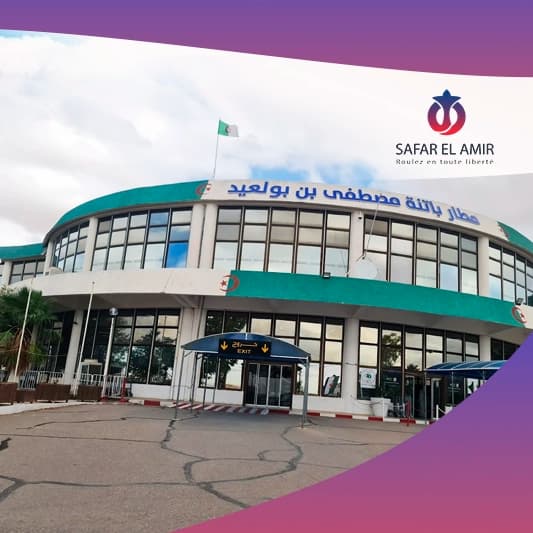
Batna agency — car rental
Pick-up at Mustapha Ben Boulaid airport or in town — the base for Timgad, the Medracen and Rhoufi.
View the agency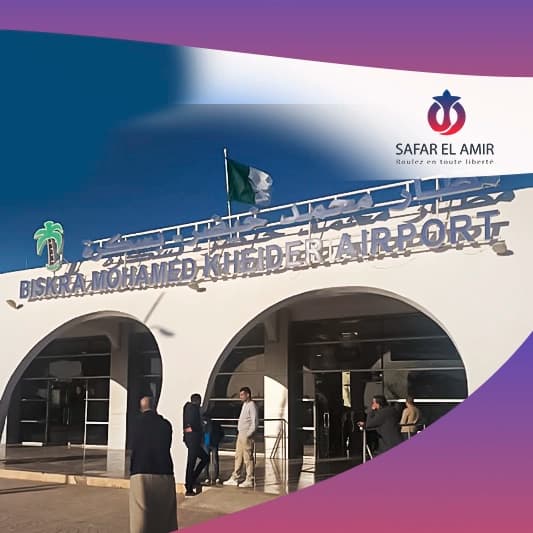
Biskra agency — car rental
The queen of the Ziban and gateway to the Sahara, to the south via the El Kantara gorges.
View the agency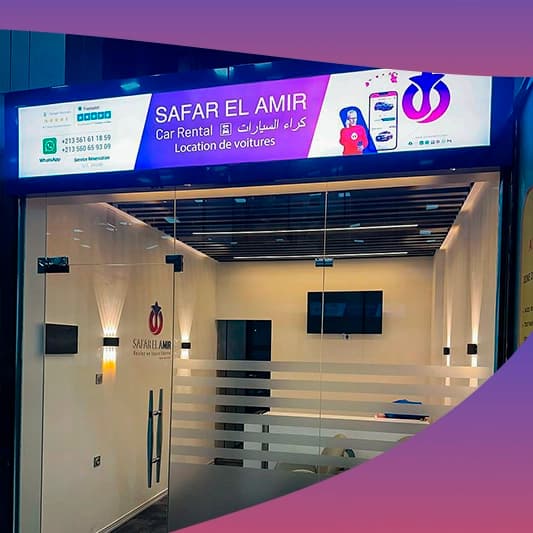
Constantine agency — car rental
The city of suspended bridges, the great hub of eastern Algeria to the north.
View the agency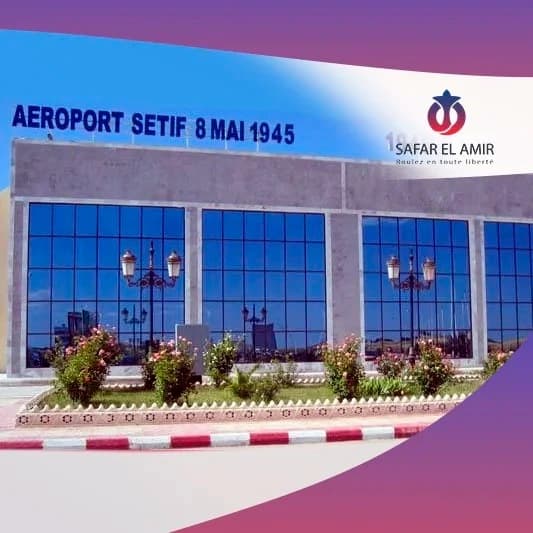
Setif agency — car rental
Djemila and the high plateaus, to the west via the East–West highway.
View the agency
Plan your trip to Batna with Safar El Amir
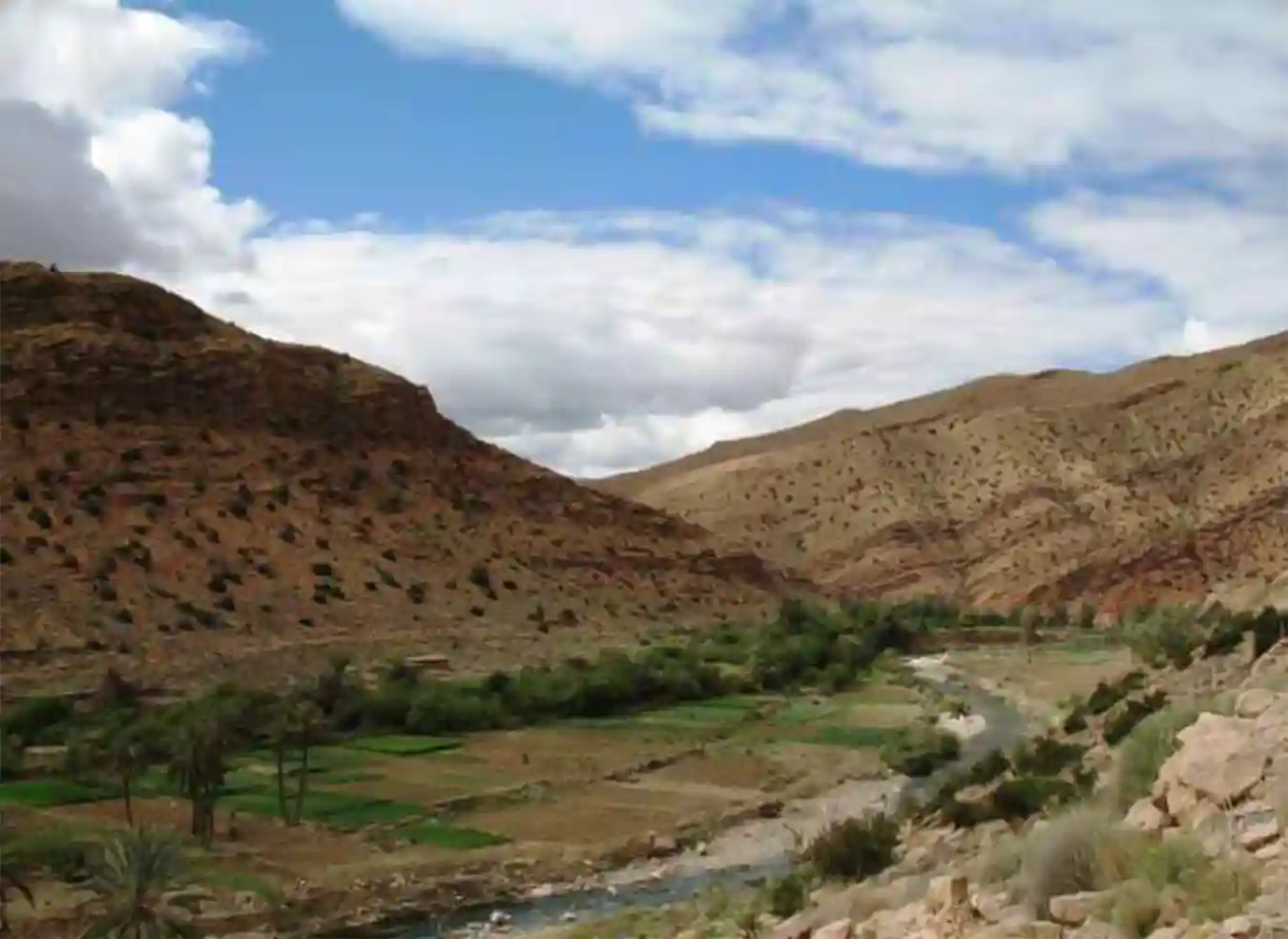
Batna, Historical Sites
Capital of the Aurès, Batna is the gateway to a rare heritage: Timgad, the UNESCO-listed "Pompeii of North Africa", the Medracen — a 3rd-century BC Berber mausoleum — and Lambaesis, former capital of Numidia and seat of the 3rd Augustan Legion. A concentrate of Roman and Berber history within driving distance.
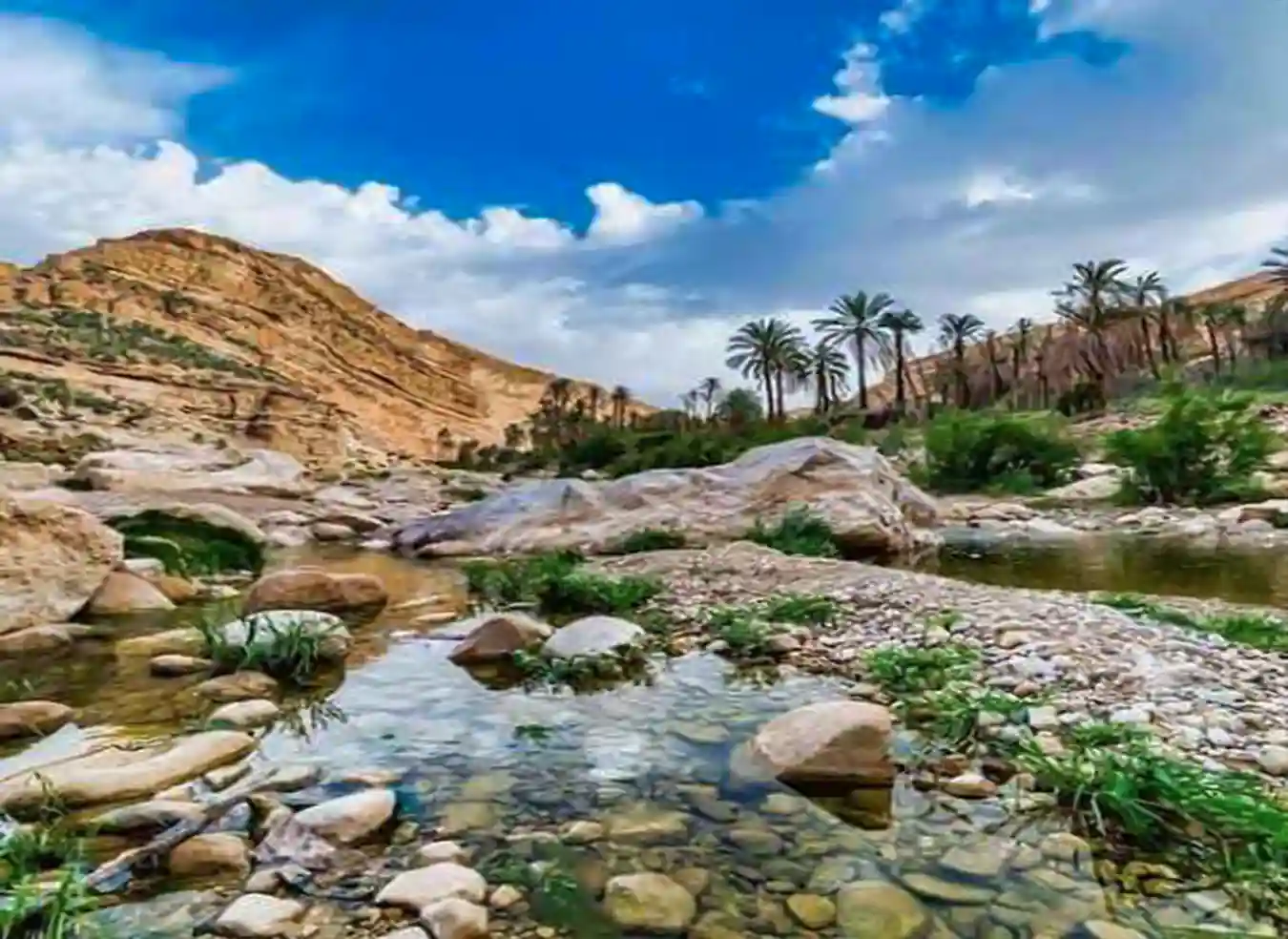
Batna, Nature And Landscapes
In the heart of the Aurès, Batna unfolds striking mountain landscapes — the Tighanimine gorges carved by the Abiod river, the Rhoufi Balcony and its Chaoui village clinging to the cliff, and the cedar forests of Belezma. A wild, preserved nature that few foreign travelers have yet discovered.
Batna, Parks & Attractions
A well-kept high-plateau city, Batna lines up wide boulevards, tidy public gardens and relaxation areas. At the city gates, the Belezma national park and its cedar forests offer hikes and fresh air — a rare natural playground for a mountain city.
Batna, Hotels & Restaurants
The cuisine of the Aurès is a mountain cuisine — generous and hearty, dominated by Chaoui chakhchoukha simmered with lamb and spices. From central hotels to traditional tables, Batna welcomes its visitors with the frank hospitality of Chaoui towns, an ideal base before hitting the road to Timgad and the gorges.
Que vous soyez en quête de paysages à couper le souffle, de sites historiques fascinants, ou de l'authenticité de notre culture, ce guide est votre compagnon idéal pour un voyage mémorable. Louer une voiture chez nous, c'est bien plus qu'une simple location – c'est le début d'une aventure inoubliable à travers l'Algérie. Alors, attachez vos ceintures et laissez-vous guider par SAFAR EL AMIR !
SAFAR EL AMIR est une entreprise spécialisée dans la location de voitures, basée en Algérie. Nous proposons des services de location de voitures avec ou sans chauffeur, des réservations en ligne à travers tout le pays, des transferts entre aéroports et hôtels, ainsi que des solutions pour vos voyages d'affaires. Nous offrons également une assistance professionnelle pour le transport vers et depuis 11 aéroports.


Stay in contact!
Let's get in touch!
Do you have a question or need help?
Contact us by email, phone or via the form below.
We are eager to help you.
Subscribe and Win!
Sign up to receive a quarterly exclusive email about the best road trip trends: a detailed itinerary, a beautiful place in Algeria, and tips for an unforgettable adventure!
Reservation service
Head Office
Follow us