
Biskra
Blog Post - Tebessa and Aures Mountains
Discover the must-see attractions not to miss during your visit to this magnificent city.
Feel free to share this blog with your loved ones so they can also benefit from these valuable tips!
Visiting Biskra: complete guide to the queen of the Ziban, gateway to the Algerian Sahara
Biskra, where the desert becomes a garden
You picture Biskra as arid, scorching, inaccessible. You think desert, sand, impossible heat — and you file the destination under places for adventurers, not for ordinary travelers. It is exactly the opposite of reality.
Biskra is an oasis city. Where the Sahara begins, millions of date palms have created a green haven that has fascinated travelers for centuries. André Gide set down his bags here in 1893 and began The Fruits of the Earth in the alleys of the Landon Garden. Henri Matisse painted his famous “Blue Nude (Memory of Biskra)” here in 1906. Béla Bartók collected Algerian folk songs here in 1913. Three major 20th-century artists found in Biskra something they found nowhere else — a light, a gentleness, a sensuality of the landscape that resists all description.
This guide is here so you understand why.
What you'll discover in Biskra:
- The Landon Garden, a botanical park created in 1872, where Gide and Matisse found their inspiration
- The Sidi Okba mosque, the oldest mosque in Algeria, built in 686 AD
- The El Kantara gorges, “gateway to the desert”, between red cliffs and a Roman bridge
- The Ziban palm grove and its Deglet Nour dates, among the best in the world
The must-sees in Biskra
Biskra is explored on foot in its center — a city built on a grid plan, well maintained, where palm trees line the boulevards and shade is always within reach. The city offers three stops that follow one another naturally in the same day.
The Landon Garden, where Gide and Matisse found their inspiration
Start with the Landon Garden. Created in 1872 by Count Albert Landon de Langeville as a botanical acclimatization park, it houses a remarkable collection of palms, bougainvilleas, acacias and eucalyptus — Mediterranean and tropical species gathered in a single shaded space, like a plant response to the dryness of the nearby desert. It is here that André Gide walked for months in 1893, feeding the pages of what would become The Fruits of the Earth. It is here that Matisse captured the light that would give rise to “Blue Nude (Memory of Biskra)”. A garden that changed two major works of European literature and painting — and that has not lost its power to evoke.
The Turkish Fort and the old town, the Ottoman imprint
From the Landon Garden, climb up to the Turkish Fort of Biskra. Built in the Ottoman era, it overlooks the old town and the palm grove from its heights — a view that sums up Biskra at a single glance: the ochre roofs of the medina, the dense green of the palms, and beyond, the desert that begins. In the alleys of the old town, artisans carry on a local craft in copper, pottery and rugs found only in the oasis cities of the Algerian south.
Hammam Salhine, thermal baths since Roman times
Seven kilometers from the center, the Hammam Salhine thermal complex has drawn visitors from all over Algeria for centuries. The Romans had already spotted it — they called it “Ad Piscinam”, the baths of the Saints — and its naturally hot waters have kept their reputation for curative virtues. Half a day in this complex is a particularly Biskran way to end a first day in the city.
The Sidi Okba mosque, the oldest in Algeria
Twenty kilometers from Biskra, the town of Sidi Okba announces itself with its palm trees before you even glimpse its minarets. It is one of the most history-laden stops in all of eastern Algeria — and one of the least known to foreign travelers.
The tomb of Okba Ibn Nafaa, founder of Kairouan
The Sidi Okba mosque was built in 686 AD over the tomb of Okba Ibn Nafaa — the Arab general who, in the 7th century, led the Islamic conquest of the Maghreb all the way to the Atlantic. He is the same man who founded Kairouan in Tunisia, one of the holy cities of Islam, before being killed by the Berber armies of Koceila and Queen Kahina in 683. His mosque is the oldest Arab monument still standing in Algeria — 14 centuries of uninterrupted prayer in a building that has passed through the Umayyads, the Abbasids, the Fatimids and the Ottomans without losing its soul. A place of pilgrimage as much as of contemplation, where the silence has a particular density.
The Sidi Okba palm grove and the Ziban oases
Around the mosque, the Sidi Okba palm grove stretches as far as the eye can see — tens of thousands of date palms that produce the Deglet Nour, the queen variety of dates, whose literal translation is “finger of light”. The oases of Tolga and Chetma, a few kilometers away, complete this picture of an almost unreal fertility at the threshold of the desert. It is here that you understand why Biskra was nicknamed “the sweet one” — not for its character, but for its dates, of which the wilaya produces several million tons each year.
The El Kantara gorges, the gateway to the desert
Between Biskra and Batna, the road crosses a passage that geographers, soldiers and travelers have always considered one of the most spectacular in Algeria. The El Kantara gorges — “the gateway to the desert” — are the exact point where the north and south of the country face each other, separated by a defile of red cliffs that the Kantara river carved over millennia.
Red cliffs between the north and south of Algeria
El Kantara is nicknamed “the red village” — and the color is there, everywhere, in the ochre and brick-red walls that frame the road for several kilometers. A Roman bridge still spans the river at the entrance to the defile — a vestige of an imperial road that linked the Roman garrisons of the north to the Saharan zones of influence in the south. On either side of the canyon, the vegetation changes radically: pines and oaks on the north side, palms and irrigated crops on the south — as if nature had decided to materialize the border between two Algerias in a few hundred meters. This striking contrast, crossed by car in a few minutes, is one of the most memorable visual experiences the country can offer.
When is the best time to visit Biskra?
Biskra has historically been a winter resort — 19th-century Europeans, from André Gide to Isabelle Eberhardt, came precisely when their own countries were cold and grey. It is no coincidence: the Biskra climate is one of the most pleasant in Algeria between October and April.
| Season | Temperatures | Ideal for |
|---|---|---|
| Autumn (Oct–Nov) | 18 – 28 °C | Palm groves, date festival (November), El Kantara gorges |
| Winter (Dec–Feb) | 8 – 20 °C | Landon Garden, Sidi Okba, Hammam Salhine baths, oases |
| Spring (March–April) | 18 – 30 °C | Tolga, excursions in the surroundings, horse-drawn carriage ride |
| Summer (May–Sept) | 36 – 45 °C | Not advised — extreme heat, visits impossible during the day |
Autumn is the season of choice — temperatures are mild, the Deglet Nour is in full harvest, and the November date festival turns the region into a festive gathering that Algerian families come from all over the wilaya to celebrate. The Biskra winter is mild and sunny — exactly what Gide was looking for when he fled the Parisian skies to come and write under the palms.
Biskra cuisine: dates and desert flavors
Biskra's cuisine is a cuisine of abundance — that of an oasis city that has always known how to turn the desert's resources into pleasures of the table. Generous, fragrant, marked by Berber and Saharan influences, it is savored slowly, like everything worthwhile in Biskra.
The Deglet Nour is the city's first taste memory. This translucent, finger-shaped date, of honeyed sweetness and rare finesse, is eaten freshly picked in the markets of Biskra — an experience that has nothing to do with the punnet dates found elsewhere. Local markets offer dozens of varieties, but the Deglet Nour remains the queen — the one connoisseurs export and Biskran families offer their guests as a sign of welcome.
Doubara is the emblematic dish — a thick soup of chickpeas simmered with olive oil, cumin, paprika and cubes of fried bread, served steaming in earthenware bowls. Simple, nourishing, deeply Saharan. Bradj with dates completes the dessert table — semolina cakes filled with dates and nuts, oven-browned, that Biskran pastry shops stack in pyramids in their windows like so many sweet arguments to stay one more day.
How to get around Biskra and its surroundings
In town, Biskra is pleasant to get around by taxi or horse-drawn carriage — a local specialty that residents still practice naturally, and that gives walks along the palm-lined boulevards a particularly Biskran feel. The city center is compact, the Landon Garden and the Turkish Fort accessible on foot from most central hotels.
For the surroundings, a car is essential. Sidi Okba 20 kilometers away, Tolga about thirty kilometers to the north-east, the El Kantara gorges on the road to Batna, the Hammam Salhine thermal complex 7 kilometers away — these destinations are easily reached in one or two days of excursions, at your own pace, with the freedom to stop in the palm groves and village markets you come across along the way. It is precisely in these unplanned stops that Biskra reveals its finest faces.
The Mohamed Khider international airport of Biskra provides connections to Algiers and the country's main cities — a direct gateway to reach the Algerian south without going through the capital. Biskra is also connected to Batna to the north by a road that crosses the El Kantara gorges, making it a natural stop on an itinerary combining the Aurès and the pre-Sahara.
Discover our car rental agencies
12 car rental agencies spread across the main airports and cities of Algeria to serve you.
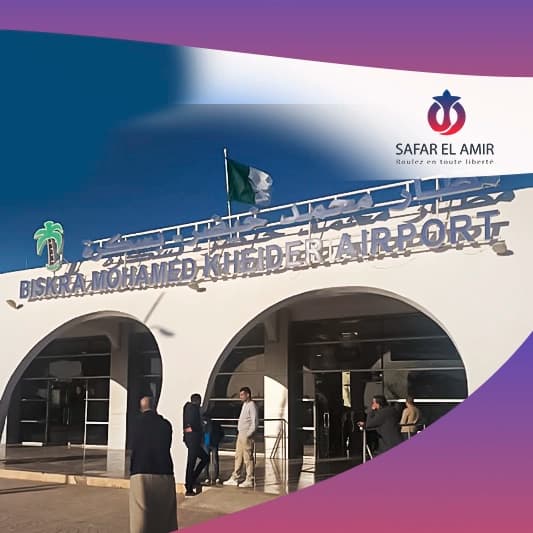
Biskra agency — car rental
Pick-up at Mohamed Khider airport or in town — the base for Sidi Okba, Tolga and El Kantara.
View the agency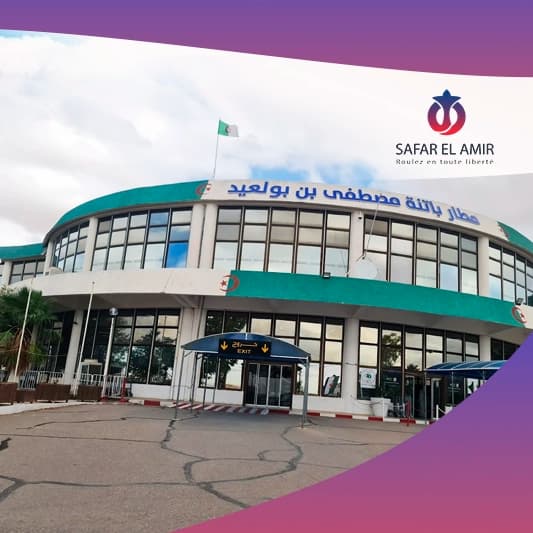
Batna agency — car rental
Gateway to the Aurès and Timgad, to the north via the El Kantara gorges.
View the agency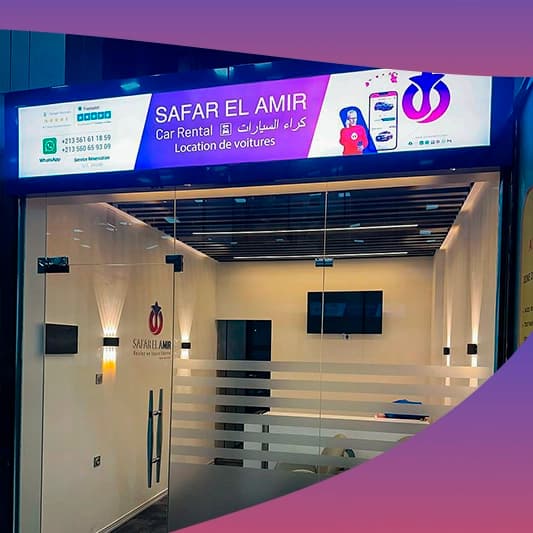
Constantine agency — car rental
The city of bridges, the great hub of eastern Algeria for continuing your journey.
View the agency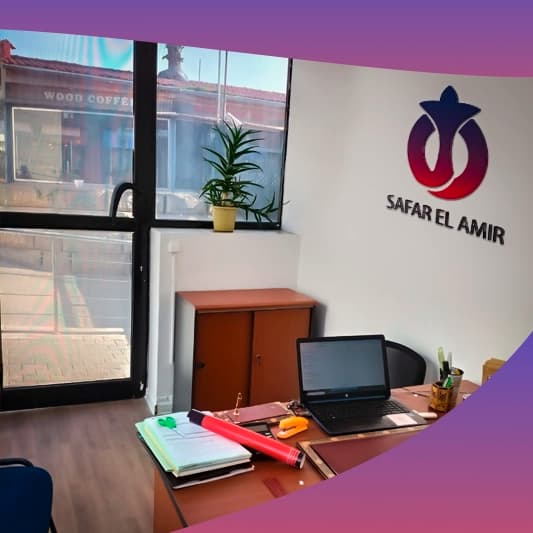
Algiers agency — car rental
The main agency, at Houari Boumediene airport and Les Bananiers.
View the agency
Plan your trip to Biskra with Safar El Amir
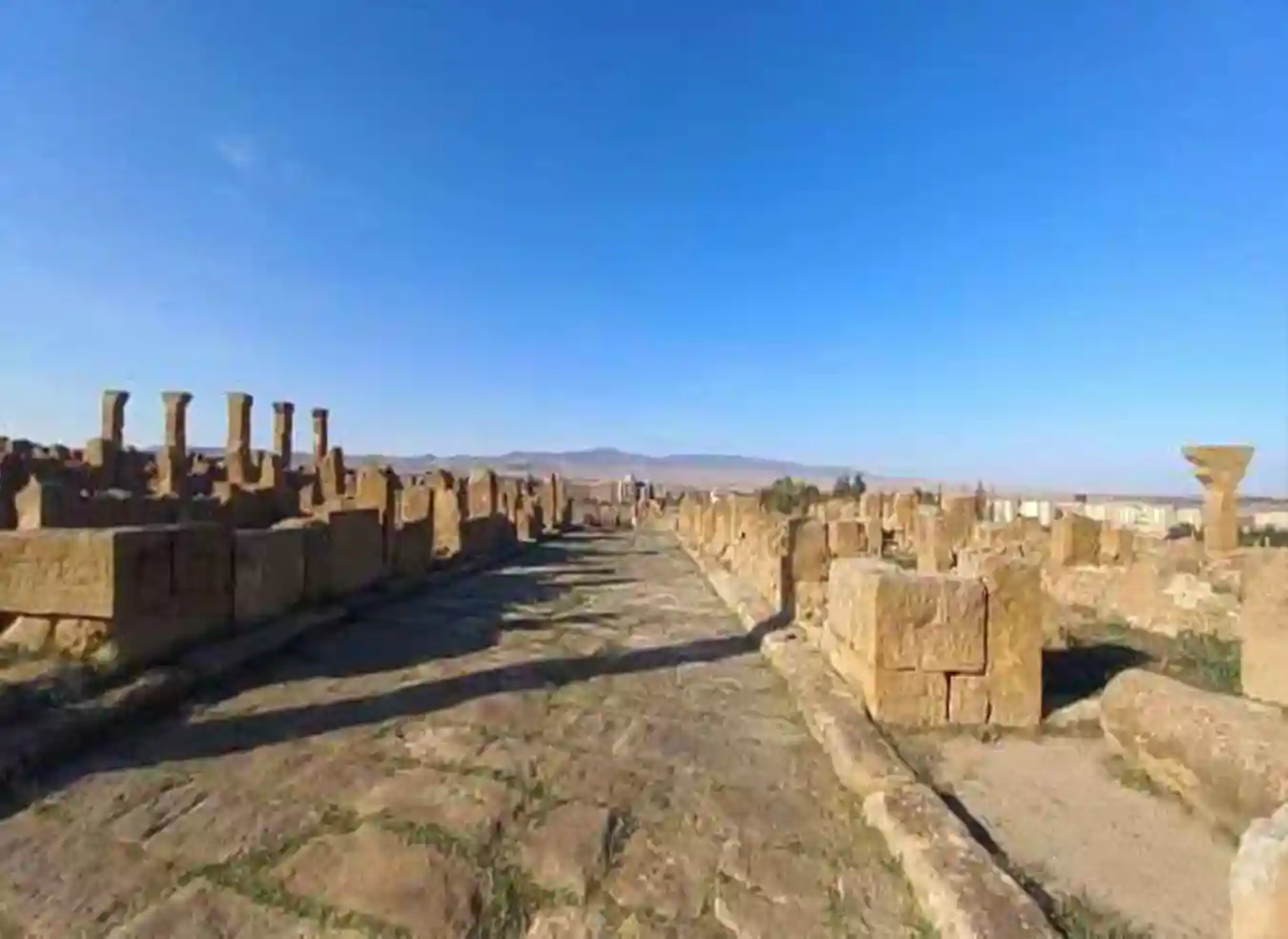
Biskra, Historical Sites
An ancient oasis city at the gates of the Sahara, Biskra holds a rare heritage: the Landon Garden where Gide and Matisse drew their inspiration, the Ottoman Turkish Fort overlooking the old town, and 20 kilometers away the Sidi Okba mosque — the oldest Arab monument in Algeria, built in 686 over the tomb of the founder of Kairouan.
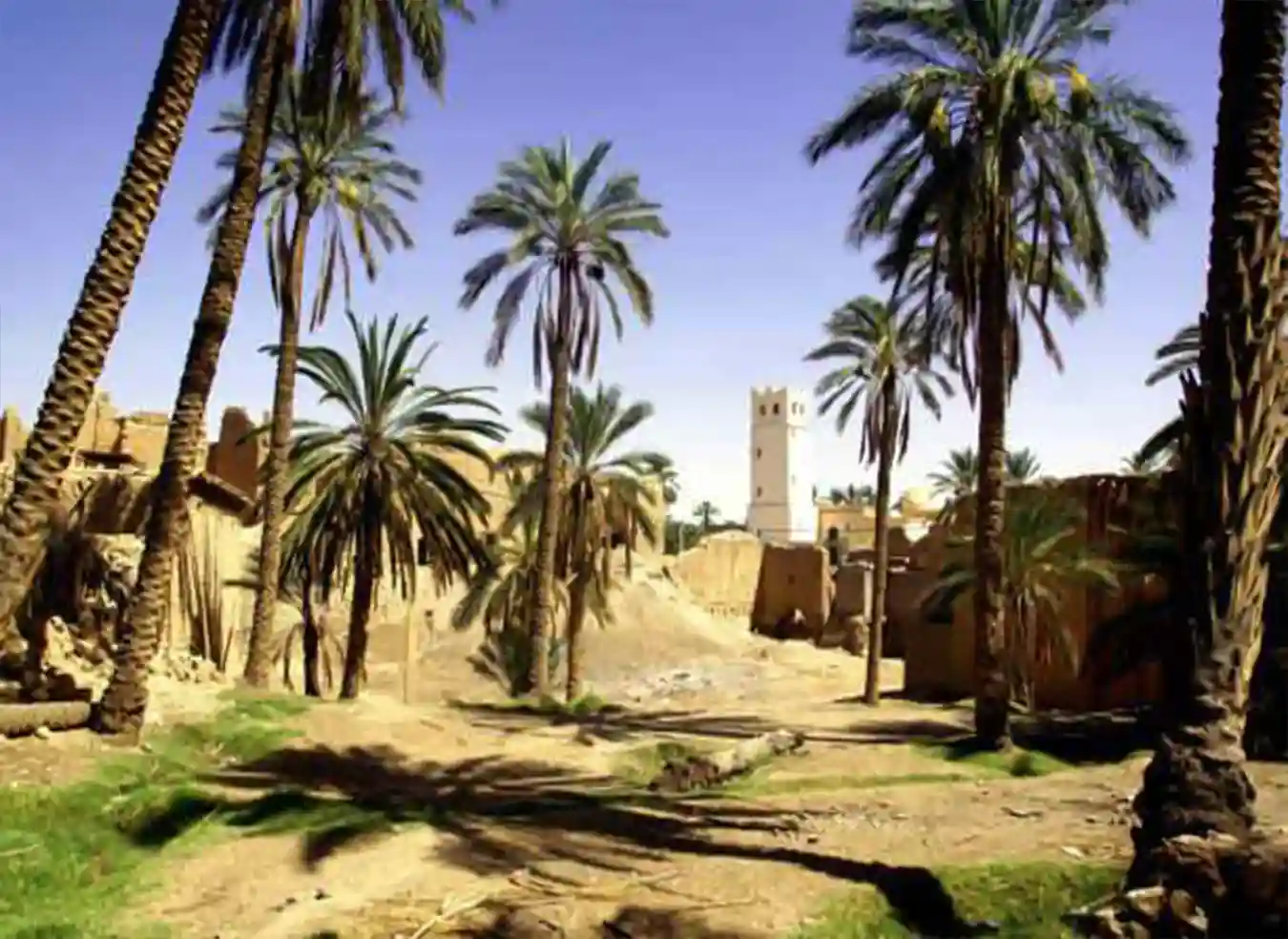
Biskra, Nature And Landscapes
Gateway to the desert, Biskra seduces with the richness of its landscapes. Between vast Saharan expanses and lush oases like Tolga, famous for its Deglet Nour dates, the city offers a striking contrast. The gorges of El Kantara, nicknamed the "Gateway to the Desert", reveal a breathtaking natural spectacle. Between mountains, palm groves, and golden dunes, Biskra is a true crossroads between greenery and Saharan immensity.
Biskra, Parks & Attractions
A green city at the threshold of the desert, Biskra cultivates the art of strolling in the shade of the palms. The Landon Garden and its botanical alleys, the date-palm-lined boulevards traveled by horse-drawn carriage, and the oases of Tolga and Chetma offer spaces of freshness and relaxation that few Saharan cities can claim.
Biskra, Hotels & Restaurants
Biskra's cuisine is a cuisine of abundance — freshly picked Deglet Nour dates, chickpea doubara served steaming, and date bradj stacked in pyramids in pastry-shop windows. From central hotels to traditional tables, Biskra welcomes its visitors with the generosity of oasis cities, around deeply Saharan flavors.
Que vous soyez en quête de paysages à couper le souffle, de sites historiques fascinants, ou de l'authenticité de notre culture, ce guide est votre compagnon idéal pour un voyage mémorable. Louer une voiture chez nous, c'est bien plus qu'une simple location – c'est le début d'une aventure inoubliable à travers l'Algérie. Alors, attachez vos ceintures et laissez-vous guider par SAFAR EL AMIR !
SAFAR EL AMIR est une entreprise spécialisée dans la location de voitures, basée en Algérie. Nous proposons des services de location de voitures avec ou sans chauffeur, des réservations en ligne à travers tout le pays, des transferts entre aéroports et hôtels, ainsi que des solutions pour vos voyages d'affaires. Nous offrons également une assistance professionnelle pour le transport vers et depuis 11 aéroports.



Stay in contact!
Let's get in touch!
Do you have a question or need help?
Contact us by email, phone or via the form below.
We are eager to help you.
Subscribe and Win!
Sign up to receive a quarterly exclusive email about the best road trip trends: a detailed itinerary, a beautiful place in Algeria, and tips for an unforgettable adventure!
Reservation service
Head Office
Follow us