An Extraordinary Museum in the Parc de la Liberté
The National Museum of Antiquities and Islamic Arts is like no other. Behind its colonial facade in the Parc de la Liberté lie 2,500 years of Algerian history: Roman bronzes discovered on the plains of Batna, polychrome mosaics unearthed from the excavations of Tipasa, and a numismatic collection of over 100,000 pieces — one of the largest in Africa.
It all began in 1835. Adrien Berbrugger, an archivist and history enthusiast, founded the first library in Algiers. Three years later, in 1838, he gathered the first antiquities in the Janissaries' barracks on rue Bab-Azoun. The museum moved several times before being officially inaugurated in 1897 in its current home in the Parc de Galland — today the Parc de la Liberté.
Plan for at least half a day. Ideally, combine the visit with the National Bardo Museum located a few minutes away by car.
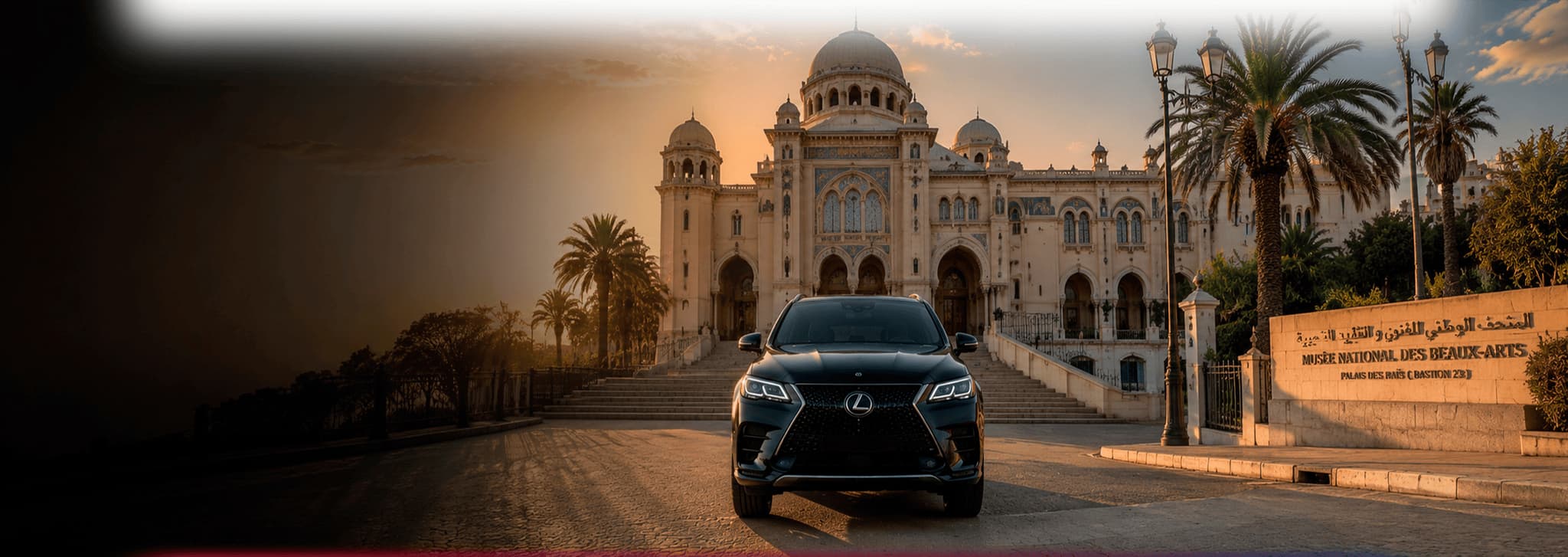
With a car rental in Algiers, you set your own pace, park at the Parc de la Liberté, and move between sites without depending on transport schedules. Delivery available at Houari Boumediene Airport.
See our rental offersA History Almost Two Centuries Old
- 1835. Adrien Berbrugger, a former student of the École des Chartes and secretary to Marshal Clauzel, founds the Algiers library. The idea of a museum is already in his mind.
- 1838. The first antiquity collections are gathered in the Janissaries' barracks on rue Bab-Azoun. The museum takes shape.
- 1863. The pieces move to the Palais Mustapha Pacha in the Casbah, alongside the first National Library of Algeria.
- 1896–1897. The museum is permanently relocated to the upper part of the Parc de Galland. It is inaugurated in 1897 by President Félix Faure, officially becoming the oldest museum in Algeria and Africa.
- 2004. The Islamic art collection is transferred to a nearby Moorish house — the Islamic Arts Pavilion is born.
- 2019. On 8 March, during the Hirak protests, the museum suffers acts of vandalism. Some objects are stolen. Police recover them quickly.
Today, the museum remains one of the most important cultural institutions in the country.
The Antiquities Collection: Rome, Carthage and Numidia Together
The main building houses the classical antiquities section. The rooms are organised around a courtyard paved with two Roman mosaics — a striking setting from the very first step inside.
The Bronzes: The Museum's Stars
This is the room that surprises visitors most. The pieces are small in format, displayed in glass cases, but their impact is immediate.
- Diana the Huntress — discovered at N'Gaous (Batna), this is one of the most accomplished Roman sculptures ever found in Algeria. The goddess of the hunt in bronze, frozen mid-stride.
- Visor Helmet and Umbo of Grimidi — unearthed at Sidi Aïssa (M'Sila), dating from the 3rd century. Roman military equipment in exceptional condition.
- The Child with the Eagle — discovered at Tazoult (Lambèse), at the centre of the room. A child holding an eagle, found in the ruins of a Roman villa. Strikingly realistic.
Other bronzes complete the room: fibulae, scales, oil lamps, and statuettes of deities.
Roman Mosaics
On the walls and floors, the mosaics are spectacular.
- The Four Seasons (Aïn-Babouch) — on the floor
- The Legend of Achilles — discovered in 1936 at Tipasa, on the walls
- Dog Hunting Scene (Ténès)
- Amphitrite from Kalâa des Béni Hammad
Numismatics: 100,000 Pieces, One of Africa's Largest Collections
An entire room is dedicated to it. Over 100,000 coins and medals covering all periods:
- Punic, Numidian, Mauretanian and Roman periods
- Vandal, Byzantine, Muslim and Ottoman periods
- Colonial period
This is one of the most comprehensive numismatic collections on the African continent. If you have an interest in monetary history, plan extra time here.
Marble, Pottery, Stelae and Jewellery
- Marble: Sarcophagus of Bellerophon (Azzefoun), Libyan stelae
- Pottery: ceramics, lamps and Roman and Punic pottery, Askos, vases
- Stelae: Abizar Stele, Votive Stele, Kerfala Stele — commemorative and funerary inscriptions
- Jewellery: collection of jewellery from the Punic, Numidian and Roman periods — bronze fibulae, glass paste rings, carnelian intaglios (Djemila)
- Treasure of Ténès: 19 gold pieces dating from the 5th century, including a brooch bearing the effigy of Galla Placidia
In the courtyard: a statue of a Roman municipal magistrate from Constantine and Ottoman faience tiles on the walls (Italian, Spanish, Dutch, Tunisian).
Practical Visit Information
How to Get There
- By car (recommended): the Parc de la Liberté car park is located directly near the museum. This is the most practical option, especially if you are combining with other sites (Bardo Museum, Jardin d'Essai, Casbah).
- By metro: Tafourah–Grande Poste station (line 1), then 15–20 minutes on foot heading up towards Télémly. Doable, but the climb is steep.
- By taxi: say "Museum of Antiquities, Boulevard Krim-Belkacem, Télémly". All drivers know it.
Recommended Duration
- Antiquities Pavilion: 2 to 3 hours (depending on your interest in numismatics)
- Islamic Arts Pavilion: 1 to 1.5 hours (manuscripts, carpets, ceramics, armory, woodwork from Islamic dynasties)
- Total: plan a full half-day
Frequently Asked Questions
What is the National Museum of Antiquities and Islamic Arts in Algiers?
It is the oldest museum in Algeria and Africa, inaugurated in 1897 in the Parc de la Liberté (Télémly, central Algiers). It houses two major collections: a classical antiquities section (bronzes, mosaics, numismatics) and an Islamic Arts Pavilion installed in a nearby Moorish house since 2004. It covers 2,500 years of art history in Algeria.
What are the opening hours of the National Museum of Antiquities?
The museum is open Saturday to Thursday, from 9am to 12pm and 1pm to 4:30pm. It is closed all day Friday. Check for any exceptional closures on musee-antiquites.art.dz before your visit.
What is the admission fee for the National Museum of Antiquities?
The adult admission fee is 200 Algerian dinars (DA). Reduced rates may apply. Confirm current prices directly with the museum or at musee-antiquites.art.dz.
How do I get to the National Museum of Antiquities in Algiers?
The address is 177 Boulevard Krim-Belkacem, Parc de la Liberté, Télémly, central Algiers. By car, the Parc de la Liberté car park is most convenient. By metro, get off at Tafourah-Grande Poste station (line 1) and walk up to Télémly (15–20 min). By taxi, say "Museum of Antiquities, Télémly".
How long does it take to visit the National Museum of Antiquities?
Allow 2 to 3 hours for the antiquities pavilion and 1 to 1.5 hours for the Islamic Arts Pavilion. In total, plan a full half-day to enjoy both collections at a comfortable pace.
What is the most famous piece in the National Museum of Antiquities?
Diana the Huntress, a Roman bronze discovered at N'Gaous (Batna), is the most iconic piece. The Visor Helmet and Umbo of Grimidi (3rd century, Sidi Aïssa) and the Child with the Eagle (Tazoult, Lambèse) are also must-sees in the bronzes room.
What is the difference between the main museum and the Islamic Arts Pavilion?
The main building (colonial style) houses the classical antiquities collection: bronzes, Roman mosaics, stelae, pottery and a numismatic collection of over 100,000 pieces. The Islamic Arts Pavilion, housed since 2004 in a nearby Moorish house, presents the arts of the Islamic dynasties that ruled Algeria and the Maghreb — manuscripts, carpets, ceramics, armory, woodwork.