
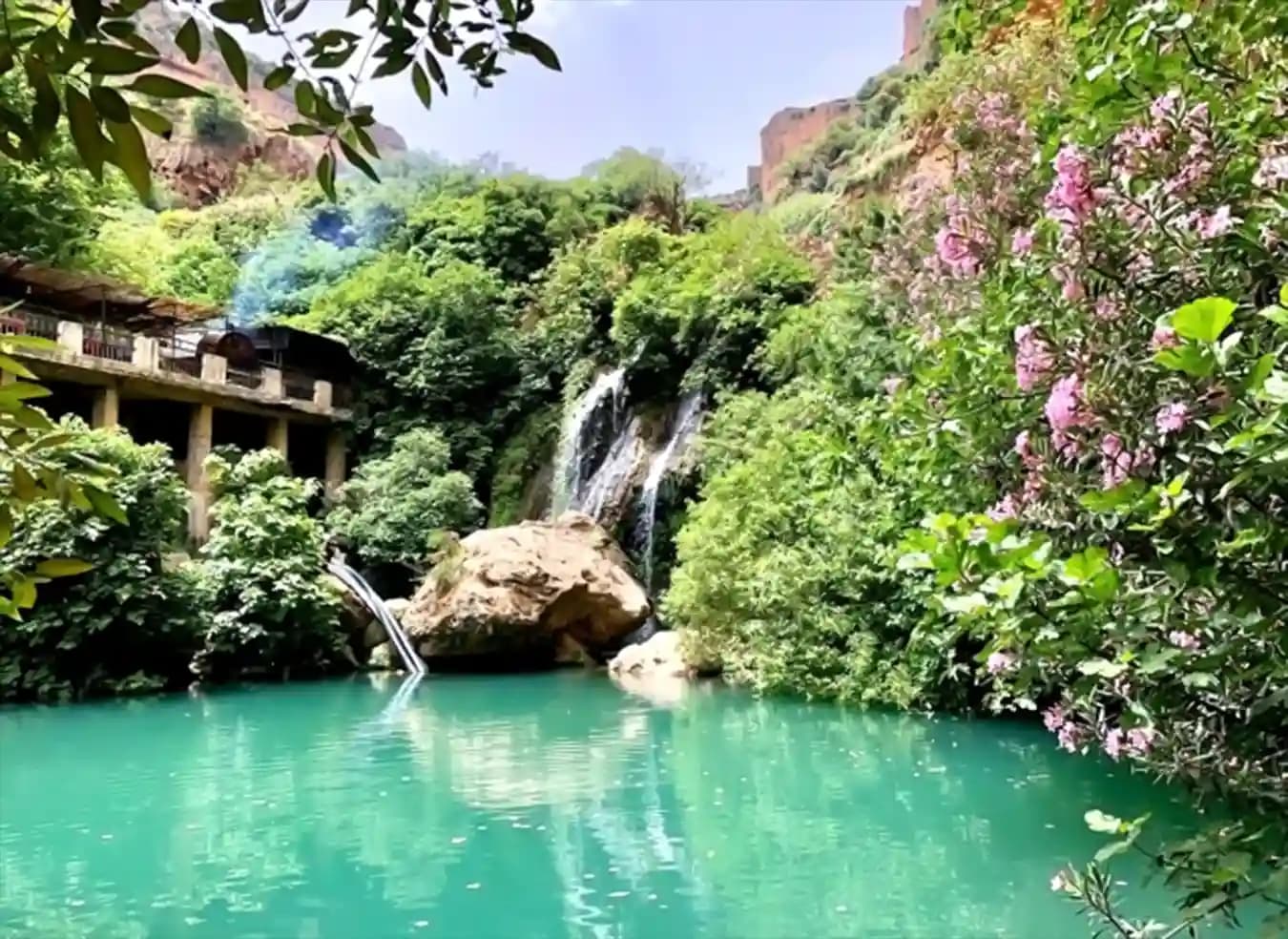
El Ourit waterfalls at a glance
The El Ourit waterfalls are about 8 km east of central Tlemcen, in a gorge carved by the river into the limestone of the Tlemcen Mountains. The water drops down seven successive tiers, forming small pools between the rocks before flowing on toward the plain.
The site is part of Tlemcen National Park, created in 1993 and covering more than 8,000 hectares of forests, cliffs and archaeological sites. Pines and oaks cover the slopes and keep the air pleasantly cool, even in midsummer.
El Ourit bridge, the work of Gustave Eiffel
High above the gorge, an iron arch bridge spans the void. Designed by engineer Gustave Eiffel and completed in 1889, it allowed the railway to cross this rugged terrain on its way to Tlemcen. More than a century later, its iron silhouette is still one of the most photographed features of the site, a counterpoint to the waterfalls.
When to see the El Ourit waterfalls
The flow depends directly on rainfall and snowmelt in the Tlemcen Mountains. The falls are at their most spectacular from winter to late spring, especially after several days of rain. By late summer the flow can drop sharply, but the shade and coolness of the gorge remain pleasant.
| Season | Flow | Atmosphere |
|---|---|---|
| Winter | Strong after rain | Spectacular, slippery ground |
| Spring | Good to strong | Vegetation in bloom, ideal |
| Summer | Low to moderate | Cool and shady, busy |
| Autumn | Variable | Quiet, lovely colors |
How to get to the El Ourit waterfalls
From central Tlemcen, head east toward Aïn Fezza: the road reaches the gorge in about fifteen minutes (8 km). From Zenata Airport, allow 36 km and around 40 minutes. There is no dedicated transport to the site, so a car is the simplest option, and renting a car at Tlemcen Airport lets you drive straight to the gorge after landing.
Park in the designated spots along the road, then walk down to the viewpoints and pools.
Tips for a successful visit
- Shoes with good grip: the rocks are wet and slippery, especially in winter.
- Swimming not recommended: the water is cold, the bottom rocky, and the current can be strong after rain.
- Keep an eye on children near the pools and cliff edges.
- Come early at weekends: the site is very popular with families in summer.
- Respect the national park: take your rubbish with you and do not light fires.
What to do around El Ourit
Continue along the same road to the Beni Add caves, 11 km away (20 minutes): after the coolness of the falls, enjoy that of the underground halls, at 13 °C all year round. Late in the day, head to the Lalla Setti plateau for sunset.
El Ourit is also part of our Tlemcen in one day itinerary. For more ideas, see our list of things to do in Tlemcen and our complete city guide.
Frequently Asked Questions
Where are the El Ourit waterfalls?
The waterfalls are about 8 km east of central Tlemcen, on the road to Aïn Fezza, roughly a fifteen-minute drive. They are part of Tlemcen National Park.
What is the best season to see the El Ourit waterfalls?
From winter to late spring, when rain and snowmelt feed the river. In summer the flow drops, but the gorge remains a cool refuge.
Can you swim at the El Ourit waterfalls?
Swimming is not recommended: the water is cold, the rocks slippery and the current can be strong after rain. Enjoy the site from the paths and viewpoints instead.
Who built the El Ourit bridge?
The iron railway bridge at El Ourit was designed by Gustave Eiffel and completed in 1889 so that the railway could cross the gorge on its way to Tlemcen.
How long should you plan for El Ourit?
Allow 1 to 1.5 hours to walk down to the pools, enjoy the viewpoints and walk back up at a relaxed pace. Add an hour and a half if you continue to the Beni Add caves.