
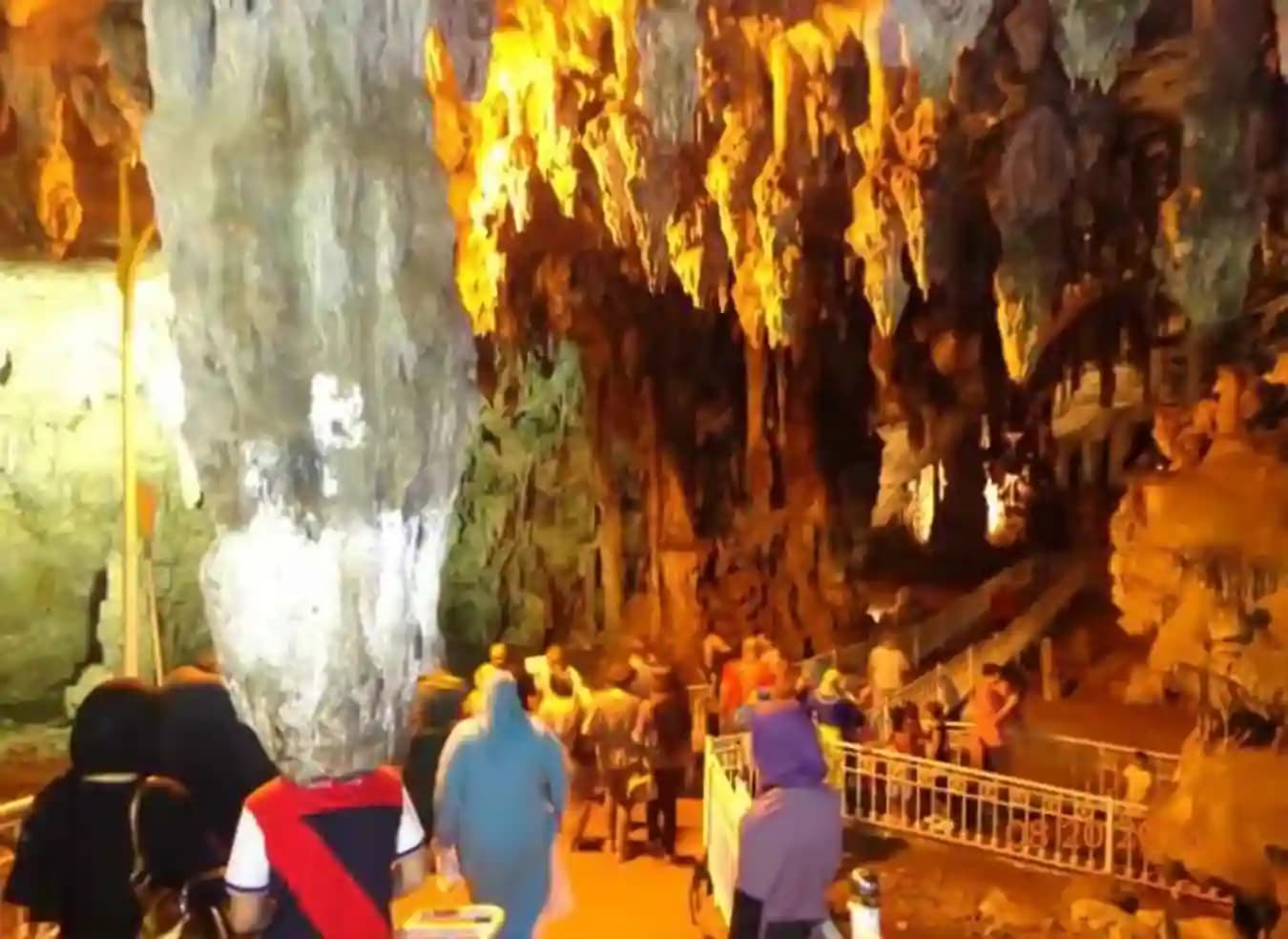
Beni Add caves at a glance
Carved into the limestone of the Tlemcen Mountains, the Beni Add caves extend for about 700 meters and reach a depth of 57 meters. Tradition has it that they were discovered by the Berber tribes who have lived in the Aïn Fezza area since ancient times. Closed during the 1990s, they reopened to the public in 2006.
The temperature stays steady at around 13 °C whatever the season. That is what makes the visit so pleasant in midsummer, when it can exceed 35 °C outside, and so convenient on rainy winter days.
| Feature | Value |
|---|---|
| Accessible length | About 700 m |
| Maximum depth | 57 m |
| Ceiling height (first hall) | Up to about 18 m |
| Temperature | About 13 °C, constant |
| Distance from Tlemcen | 23 km, about 30 min |
How were the caves formed?
The Beni Add caves are a textbook example of karst landscape. Over millions of years, slightly acidic rainwater seeped into cracks in the limestone and dissolved it, carving tunnels and then huge chambers.
Drop by drop, water carrying dissolved limestone then deposited thin layers of calcite: those hanging from the ceiling form stalactites, those rising from the floor form stalagmites. When the two meet, they create columns, some of which reach impressive sizes here.
What the visit is like
The visit begins with a long staircase down the main passage, opening onto the first hall, dominated by a huge cluster of stalagmites under a vault about 18 meters high. A lit route with steps and handrails then links several halls with evocative names: the Hall of Sabres, whose slender formations look like blades, the Mujahideen Hall and the King's Hall. Visitors also enjoy spotting a Statue of Liberty or a falcon in the rock.
Allow 45 minutes to 1 hour underground, more if you take time to photograph the formations. The climb back up the stairs takes a little effort, so go at your own pace.
How to get to the Beni Add caves
The caves are near Aïn Fezza, about 23 km east of central Tlemcen, a 30-minute drive. The road first passes the El Ourit waterfalls, 11 km from the caves, the perfect chance to combine both visits.
From Zenata Airport, allow 47 km and just under an hour. As there is no regular dedicated transport to the site, driving is simplest: a rental car picked up at Tlemcen Airport takes you straight there.
Practical tips
- A light jacket, even in summer: 13 °C feels cool after the heat outside.
- Closed shoes with non-slip soles: the floor and steps are often damp.
- Accessibility: the visit involves many steps and is not suitable for people with reduced mobility or for strollers.
- Do not touch the formations: contact with hands damages calcite that takes centuries to form.
- Avoid peak times: the caves are packed during school holidays and at weekends. Come at opening time or on a weekday.
- Opening hours vary with the season; check on site or with the tourist office before setting off.
What to do around the Beni Add caves
The favorite combo: caves in the morning, a picnic, then the El Ourit waterfalls on the way back. Late in the day, head up to admire the city from the Lalla Setti plateau.
Beni Add is also the alternative suggested in our Tlemcen in one day itinerary for very hot or rainy days. To plan your stay, see our list of things to do in Tlemcen and our complete Tlemcen guide.
Frequently Asked Questions
Where are the Beni Add caves?
The caves are near Aïn Fezza, about 23 km east of central Tlemcen, around thirty minutes by car, just past the El Ourit waterfalls.
How deep are the Beni Add caves?
The caves go down to 57 meters below the surface and stretch over about 700 meters of passages and halls.
What is the temperature inside the Beni Add caves?
The temperature is stable at around 13 °C all year round. Bring a light jacket, even in midsummer.
How long does the cave visit take?
Allow 45 minutes to 1 hour underground, plus possible waiting time during school holidays and weekends, the busiest periods.
Are the Beni Add caves suitable for children?
Yes, children love the visit, as long as they can manage a lot of steps. The route is not suitable for strollers or people with reduced mobility.
Sources