
Dive into Zayyanid and Marinid heritage
Between the 11th and 16th centuries, Tlemcen was ruled in turn by the Almoravids, Almohads, Zayyanids and Marinids. Each dynasty left a major monument behind, and most can be reached on foot from the city center. Start early: the light is softer and the sites are quieter.
1. Stroll through the medina and the Kissaria
The medina is best explored without a map, following its narrow lanes, carved wooden doors and small shops. The Kissaria, the old covered market, is still the commercial heart of the historic center, with fabrics, slippers, traditional jewelry and spices side by side. It is the best place to soak up the atmosphere and spot craft workshops.
2. Admire the Great Mosque of Tlemcen
Founded in 1082 by the Almoravid ruler Yusuf ibn Tashfin and embellished in 1136 under his son Ali ibn Yusuf, the Great Mosque is one of the finest examples of Almoravid art in the Maghreb, famous for its openwork dome and carved-plaster mihrab. It is still an active place of worship: dress modestly and visit outside prayer times.
3. Visit the Museum of Islamic Calligraphy
Right next door, the former Sidi Bel Hassen mosque, completed in 1296 under the Zayyanids, now houses the National Public Museum of Islamic Calligraphy. The building alone is worth the visit, with delicate stucco work, a cedar ceiling and intimate proportions that contrast with the neighboring Great Mosque.
4. Step inside El Mechouar palace
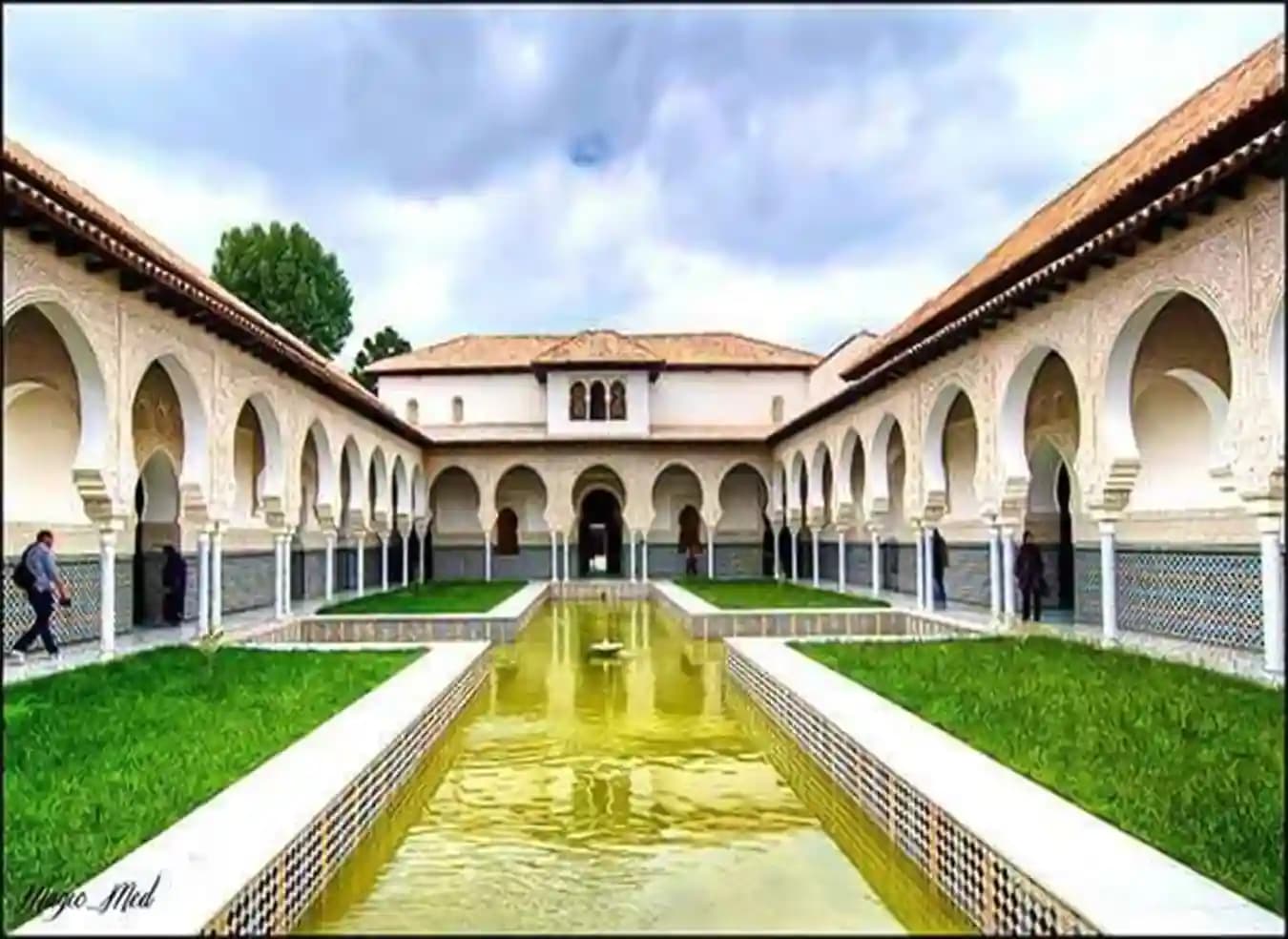
The citadel and royal residence of the Zayyanid sultans since Yaghmurasen ibn Zayyan, who founded the dynasty in the 13th century, El Mechouar dominates the center with its high walls. The palace was rebuilt on its foundations in 2010–2011, when Tlemcen was Capital of Islamic Culture. Arcaded courtyards, pools and zellige tiles give a good idea of the splendor of the Zayyanid court.
5. Visit the Sidi Boumediene complex
On the heights of El Eubbad, 3 km east of the center, lies Abu Madyan, known as Sidi Boumediene, an Andalusian mystic who died near Tlemcen at the end of the 12th century and became the city's patron saint. Around his mausoleum, the Marinid sultan Abu al-Hasan built a mosque in 1339 and a madrasa in 1347, where Ibn Khaldun taught. Its monumental tiled gateway is one of the most photographed sights in Tlemcen.
6. Travel back in time at the Mansourah ruins
Less than 3 km west, the 38-meter minaret of Mansourah rises among the ramparts of the camp-city built by the Marinids during the siege of Tlemcen (1299–1307). Our Mansourah visitor guide tells this remarkable story and suggests the best times to photograph the site.
Get some altitude: nature around Tlemcen
Backed by the Tlemcen Mountains, the city is surrounded by forests, limestone cliffs and springs. The next four outings are all within 25 km of the center.
7. Ride the cable car to the Lalla Setti plateau
From the Grand Bassin park, a 1,689-meter gondola reaches the Lalla Setti plateau, at around 1,000 meters, in about five minutes. Up top you will find lawns, playgrounds, cafés and, above all, a sweeping view over the city and the plain. All the practical details are in our Lalla Setti plateau guide.
8. Cool off at the El Ourit waterfalls
Eight kilometers east, seven tiered cascades tumble down a wooded gorge beneath an iron railway bridge designed by Gustave Eiffel in 1889. The site is at its most spectacular after winter and spring rains. Read our guide to the El Ourit waterfalls before you go.
9. Go underground in the Beni Add caves
Near Aïn Fezza, 23 km away, the Beni Add caves reach 57 meters below ground. Stalactites, stalagmites and high-ceilinged halls are visited at a constant temperature of around 13 °C, making it a perfect outing in midsummer or on a rainy day.
10. Hike in Tlemcen National Park
Created in 1993, Tlemcen National Park covers more than 8,000 hectares of forests (Ifri, Zarifet, Aïn Fezza), cliffs and archaeological sites, including El Ourit and Mansourah. Forest trails make for pleasant half-day walks under oaks and pines. Bring water and sturdy shoes, and let someone know your route.
Experience Tlemcen culture
11. Listen to Arab-Andalusian music
Tlemcen is the cradle of the gharnati school, a direct heir to the music of Granada, and of hawzi, its popular version sung in dialect. Concerts, festivals and Ramadan evenings are the best opportunities to hear it live; ask the city's music associations and cultural centers for upcoming events.
12. Discover local crafts and the chedda
Gold-thread embroidery, weaving, copperwork and leather slippers: Tlemcen crafts carry on Andalusian know-how. Their emblem is the chedda, the bridal costume of Tlemcen, whose rites and craftsmanship have been inscribed on UNESCO's Intangible Cultural Heritage list since 2012. Shops in the medina let you admire these pieces up close.
13. Taste Tlemcen cuisine
Tlemcen's cooking is known for its refinement: hand-rolled couscous, harira, almond and honey pastries, and mint tea served in the medina's cafés. To eat like a local, favor small family-run places in the center and traditional pastry shops.
What to do in Tlemcen at night?
14. As the sun sets, head up to the Lalla Setti plateau: the lights of the city and the plain come on before your eyes, and the air is cooler than down below, even in summer. Then come back down to wander around the center's squares and cafés, which stay lively late on summer evenings and Ramadan nights.
Leave the city: the coast and Nedroma
15. Within an hour's drive, Tlemcen opens onto the coast: Honaïne, the former port of the Zayyanid kingdom, the coves around Ghazaouet, or the long beach of Marsa Ben M'hidi near the border. Our selection of the best beaches near Tlemcen details distances and atmosphere. On the way, stop in Nedroma, whose medina and Great Mosque date back to the Almoravid period.
Practical tips to plan your stay
- When to go? Spring (March to May) and autumn (September to November) offer the most pleasant temperatures. Winter is cool at altitude; summer is hot but ideal for combining the city with the beaches.
- How to get there? Fly into Tlemcen Zenata Airport, or drive from Oran (about 2 hours) or Algiers (nearly 6 hours).
- How to get around? The medina is walkable, but El Eubbad, Mansourah, Lalla Setti, El Ourit and Beni Add are spread out: renting a car at Tlemcen Airport remains the most flexible option.
- How long? One day covers the highlights (see our Tlemcen in one day itinerary); two or three days let you add nature and the sea.
To dig deeper into the city's history, read our complete guide to visiting Tlemcen.
Frequently Asked Questions
What can you do in Tlemcen in one day?
In the morning, visit the Great Mosque, the calligraphy museum, the medina and El Mechouar palace. In the afternoon, continue to Sidi Boumediene, the Mansourah ruins and the El Ourit waterfalls, then end with sunset on the Lalla Setti plateau.
What are the must-see monuments in Tlemcen?
The Great Mosque (1082), the former Sidi Bel Hassen mosque (1296), El Mechouar palace, the Sidi Boumediene complex (1339) and the Mansourah minaret are the five monuments not to miss.
What is there to do in Tlemcen at night?
Go up to the Lalla Setti plateau for the view over the illuminated city, then stroll around the center's squares and cafés. In summer and during Ramadan, the city stays lively late, often with Andalusian music concerts.
When is the best time to visit Tlemcen?
Spring and autumn are ideal, with mild temperatures, full waterfalls in spring and pleasant light for sightseeing. Summer works well if you want to combine the city with the beaches.
Is Tlemcen close to the sea?
Yes. The nearest beaches, around Honaïne and Ghazaouet, are about an hour's drive away. Marsa Ben M'hidi and the Moscarda coves near the Moroccan border take a little over an hour and a half.